

Chronic Pain
Living with chronic pain is one of the most quietly exhausting experiences a person can carry. It isn't just physical; it seeps into your relationships, your sense of self, and your ability to imagine a future that feels full and meaningful. You may have seen doctors, tried treatments, and still found yourself wondering whether things will ever truly change. They can. And you don't have to navigate this alone.
While acute pain often resolves once an underlying issue is treated, chronic pain can persist long after the body has technically healed. Understanding that complexity is where healing begins.
You may recognize some of these experiences:
Reduced mobility and physical deconditioning
Avoidance of work, responsibilities, or meaningful activities
Strain in relationships
A growing sense of hopelessness, frustration, or loss of self-worth
Negative thoughts about your abilities or future
These changes are understandable responses to persistent pain, but they can unintentionally worsen pain intensity and psychological distress.
Why Treatment Is Important
Living with chronic pain can feel profoundly isolating. Gradually, the world can begin to shrink as activities become harder, less predictable, or simply no longer feel worth the effort. Over time, pain can quietly reshape how you see yourself and what you believe is possible for your future.
Psychological treatment doesn't promise to eliminate pain, but it can fundamentally change your relationship with it. Through therapy, many people find they are able to reduce the ways pain controls their daily life, rebuild a sense of agency, and reconnect with the people and activities that matter most to them. The goal isn't just to cope, but to genuinely live.
With the right support, you can:
Respond more effectively to pain flare-ups
Increase activity safely and gradually
Reduce fear, avoidance, and self-criticism
Challenge unhelpful beliefs about pain and limitations
Improve mood, functioning, and overall quality of life
Not only can you better manage your pain, but you can reclaim a life that feels meaningful and worth living.
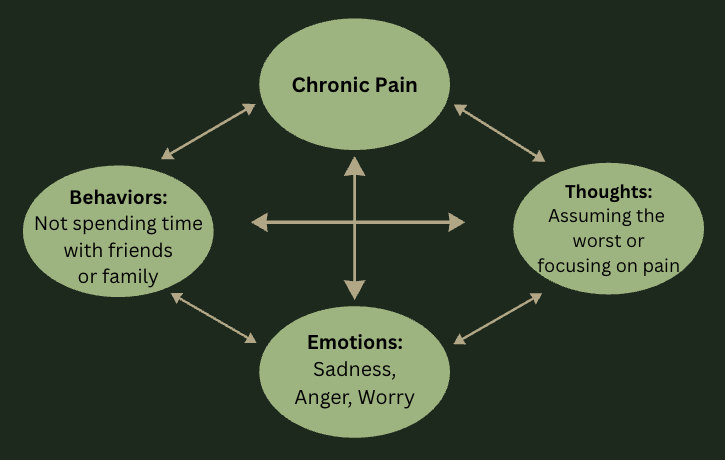
Biopsychosocial model of chronic pain
Our approach
Our approach to chronic pain therapy is grounded in the biopsychosocial model, which recognizes that pain is shaped not only by biology, but by psychological, emotional, and social factors working together. Care begins with a thorough, individualized evaluation to understand your unique pain experience, medical history, daily functioning, and personal goals.
Treatment is collaborative, structured, and tailored to what you actually need. Our primary treatment approach is Cognitive Behavioral Therapy for Chronic Pain (CBT-CP), one of the most well-researched and effective psychological treatments available for people living with persistent pain.
CBT-CP is a gradual, skills-based approach that helps you:
Re-engage with meaningful activities at a pace that feels safe
Manage pain flare-ups with greater confidence and less fear
Reduce overall pain intensity, emotional distress, and avoidance
Challenge the beliefs about pain and limitation that may be quietly holding you back
Improve your mood, your relationships, and your day-to-day quality of life
Many clients find that over the course of treatment, they experience not just better pain management, but a genuine shift in how they relate to themselves and their lives. That kind of change is what we're here for.